

In a world dominated by tech and data, arts education often gets the short end of the paintbrush. But let’s face it: who wouldn’t want to unleash their inner Picasso or channel their inner Shakespeare? Arts education isn’t just about learning to draw or act; it’s about nurturing creativity, critical thinking, and emotional intelligence. Plus, it’s a fantastic excuse to wear berets and sip lattes while discussing the meaning of life—what’s not to love?
Understanding Arts Education
Arts education encompasses various forms of artistic expression, including visual arts, music, dance, and theater. It provides individuals with tools for creativity, innovation, and cultural understanding.
Definition of Arts Education
Arts education refers to the systematic teaching of artistic disciplines. Courses may include painting, sculpting, music theory, and drama. This education encourages students to explore their creativity and develop technical skills. Various settings, such as schools and community centers, often provide arts education programs. These programs foster personal expression and cultural appreciation. Students gain confidence through creating and performing art.
Importance of Arts Education
Arts education plays a crucial role in student development. It promotes creativity and critical thinking skills. Engaging in artistic activities enhances emotional intelligence and social awareness. Research shows that students involved in the arts achieve higher academic success. Arts education encourages collaboration, as students often work together on projects. It also helps individuals connect with their cultural heritage, fostering a sense of belonging. Overall, integrating arts into education enriches the educational experience.
The Benefits of Arts Education
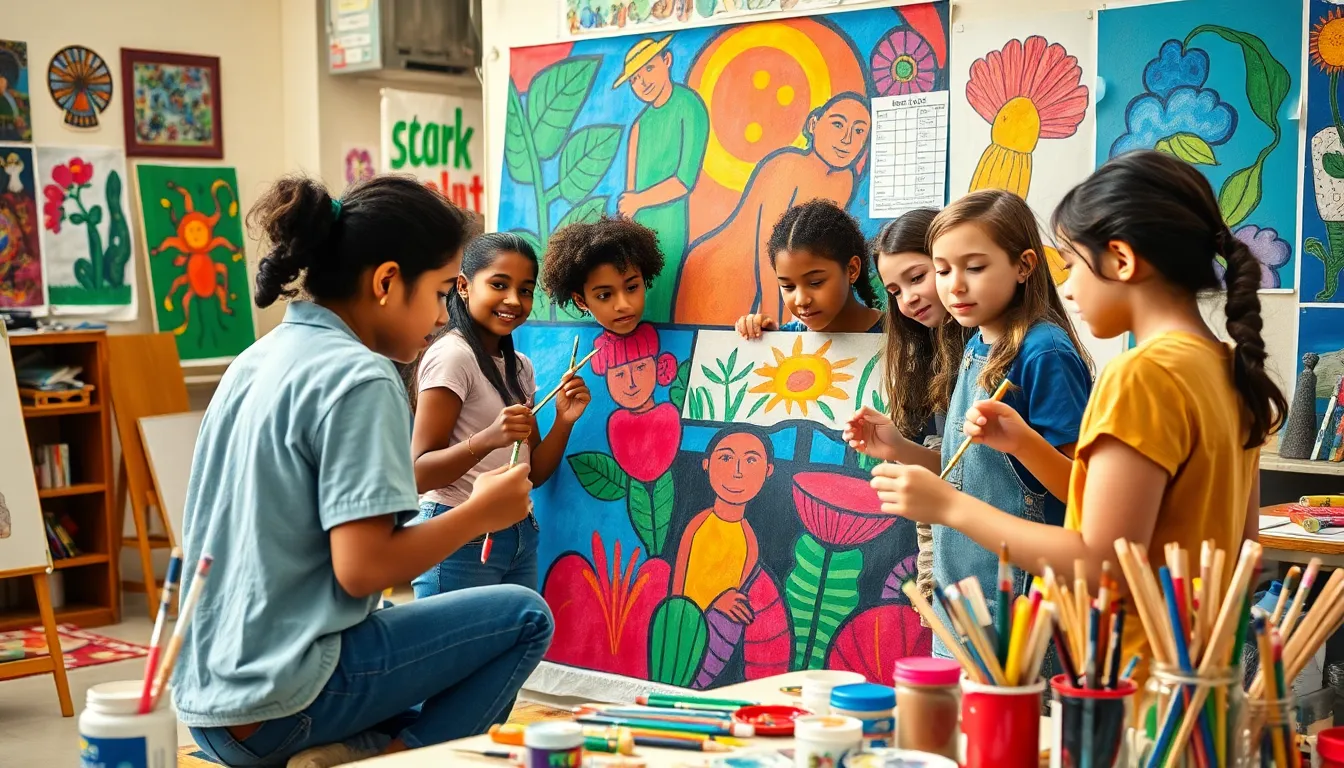
Arts education significantly contributes to personal and academic growth. Various aspects of development benefit from engaging in artistic disciplines.
Cognitive Development
Cognitive skills improve through arts education. Participation in music or visual arts enhances memory and attention span. Studies show that students involved in the arts display better problem-solving abilities. Engagement in creative projects fosters critical thinking skills. Additionally, students demonstrate increased motivation and improved academic performance across subjects. Research from the Arts Education Partnership indicates that students in arts-rich environments excel in standardized assessments. Creative activities stimulate various areas of the brain, leading to enhanced overall learning experiences.
Social Skills Enhancement
Social skills flourish in arts education settings. Collaborative projects encourage teamwork and communication among students. Participating in group performances or art projects allows individuals to express their ideas and listen to others. This interaction builds empathy and understanding of diverse perspectives. Furthermore, students learn to navigate social dynamics, which can lead to long-lasting friendships. Arts programs also provide opportunities for leadership development, as students often take on roles that require responsibility and initiative. Overall, involvement in arts education cultivates essential social competencies crucial for success in both personal and professional environments.
Challenges in Arts Education
Arts education faces significant challenges that impact its effectiveness and reach. Two prominent issues include inadequate funding and accessibility barriers.
Funding and Resources
Funding plays a crucial role in the availability of arts education programs. Many schools lack sufficient funds to support comprehensive arts initiatives. Budget cuts often target arts programs, resulting in limited resources for educators and students. Schools with robust arts programs tend to create a well-rounded educational experience. The National Assembly of State Arts Agencies reported that arts funding has declined by 20% over the past decade. These financial constraints diminish creative opportunities and restrict the variety of disciplines offered.
Accessibility Issues
Accessibility remains a pressing challenge within arts education. Students from low-income backgrounds often face obstacles in participating in these programs. Factors such as transportation, cost, and lack of local resources contribute to limited access. Rural areas frequently exhibit a scarcity of arts education opportunities, isolating students from creative experiences. The disparity in access can hinder personal expression and cultural understanding among marginalized communities. For arts education to thrive, providing equal opportunities for all students is essential.
Successful Arts Education Programs
Successful arts education programs demonstrate the value of creative disciplines in schools. They showcase how these programs can enrich student experiences and promote academic achievement.
Case Studies
Arts education programs in various settings illustrate success. The Los Angeles Arts Education Program increased engagement in public schools, resulting in a 30% rise in student attendance. The Chicago Arts Partnership in Education effectively merged arts and academics, enhancing student literacy rates by 20% through creative writing initiatives. Another example exists in the Kennedy Center’s Any Given Child initiative, targeting underserved communities to ensure access to quality arts instruction. These case studies highlight that when arts education integrates with traditional learning, students exhibit improved focus and collaboration.
Key Strategies for Implementation
Implementing effective arts education requires targeted strategies. First, collaborating with local artists and arts organizations can enhance curriculum relevance. Second, training teachers in arts integration enables creative teaching methods that engage students. Third, securing sustained funding through grants and community partnerships supports ongoing programs. Building strong community support fosters a culture that values arts in education. Tracking student progress and incorporating feedback ensures continual improvement, leading to more effective arts programs.
Future of Arts Education
The future of arts education focuses on adaptability and innovation.
Trends and Innovations
Technology has transformed arts education in significant ways. Virtual reality and augmented reality create immersive artistic experiences for students. These tools enhance learning, allowing students to interact with art in unique environments. Collaboration platforms also enable distant classrooms to connect, fostering a global exchange of ideas. Additionally, online resources increase accessibility, empowering students to explore various artistic disciplines at their own pace. Emerging trends emphasize interdisciplinary approaches, integrating arts with subjects like science and mathematics. These initiatives highlight how creativity influences problem-solving skills. Schools adopting these trends report heightened student engagement, contributing to overall academic success.
Advocacy for Arts Education
Advocacy plays a crucial role in ensuring the future of arts education. Organizations and individuals unite to raise awareness about its significance. Legislative efforts push for increased funding for arts programs, vital for maintaining educational resources. Communities mobilize to support local arts initiatives, aiming to provide equitable access for all students. Grassroots movements also emerge, encouraging families to participate in arts education discussions. Stakeholders emphasize arts’ role in fostering essential skills, such as critical thinking and collaboration. Amplifying these messages helps combat the funding decline noted by the National Assembly of State Arts Agencies. Concerted efforts create a network of support, ultimately strengthening the position of arts education in academic settings.
The significance of arts education can’t be overstated. It cultivates creativity and emotional intelligence while enhancing cognitive and social skills. As students engage in various artistic disciplines, they not only develop personal expression but also a deeper understanding of their cultural heritage.
Despite challenges like funding and accessibility, successful programs demonstrate the transformative power of arts education. By advocating for equal opportunities and embracing innovative approaches, communities can ensure that all students benefit from these enriching experiences. Prioritizing arts education is essential for fostering well-rounded individuals ready to thrive in an increasingly complex world.


